
Skip to content
24/7 coordination: 0333 006 2393
Care Circle Ltd — The Reliable Care Agency
Community physiotherapy and occupational therapy

Physiotherapy and occupational therapy, where life happens.

Personalised support for movement, safety and everyday independence — in your own home or the place you receive care.

  • HCPC-registered physiotherapists and occupational therapists
  • Goals built around daily life
  • Individual assessment and quotation
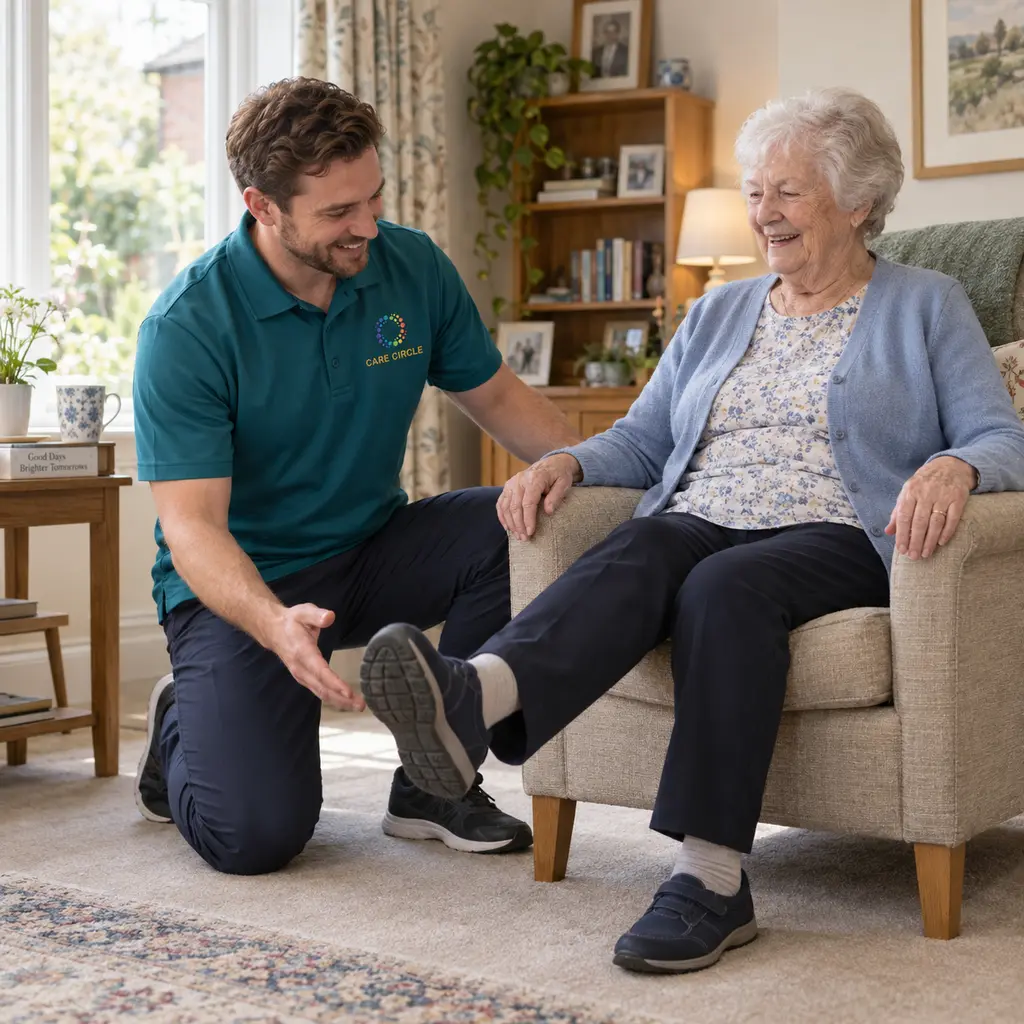
Physiotherapist in a teal Care Circle uniform supporting an older woman with a seated movement exercise in a British home
Rehabilitation shaped around everyday life at home.
Built around youMovement.Independence.Everyday life.

Getting to a clinic is not always practical, and a clinic cannot show every difficulty that happens during an ordinary day. Community physiotherapy and occupational therapy bring assessment into the real environment: the chair you rise from, the bathroom you need to use safely, the kitchen where you prepare a drink and the route you take to the front door. Care Circle welcomes enquiries from individuals, families and care providers, with the appropriate therapy discipline, clinician experience, location and availability confirmed before support is arranged.

Four settings. One individual approach.

Find the therapy support that fits your setting.

Choose where support is needed for guidance on community visits, preparation and working with the people around you.

Start with what you want to do more safely or comfortably.

A useful starting point may be getting to the bathroom with greater confidence, managing the front step, preparing a simple meal, returning to the dining room or rebuilding a routine after a hospital stay. We listen to the person’s priorities alongside the concerns of those supporting them. A diagnosis helps inform the discussion, but it does not describe the whole person or determine a programme on its own.

Physiotherapy commonly focuses on movement, strength, balance, walking, pain and physical rehabilitation. Occupational therapy focuses on the activities a person needs or wants to do and how their abilities, routines and surroundings affect those activities. Some people need one discipline; others benefit from coordinated PT and OT input. The first conversation helps identify the most suitable starting point.

  • Mobility, balance and confidence after a fall or reduced activity
  • Rehabilitation following hospital discharge, illness or surgery
  • Everyday tasks such as washing, dressing, toileting, preparing food and moving around the home
  • Home safety, equipment and practical adaptation recommendations
  • Neurological rehabilitation and support for changing physical or cognitive abilities
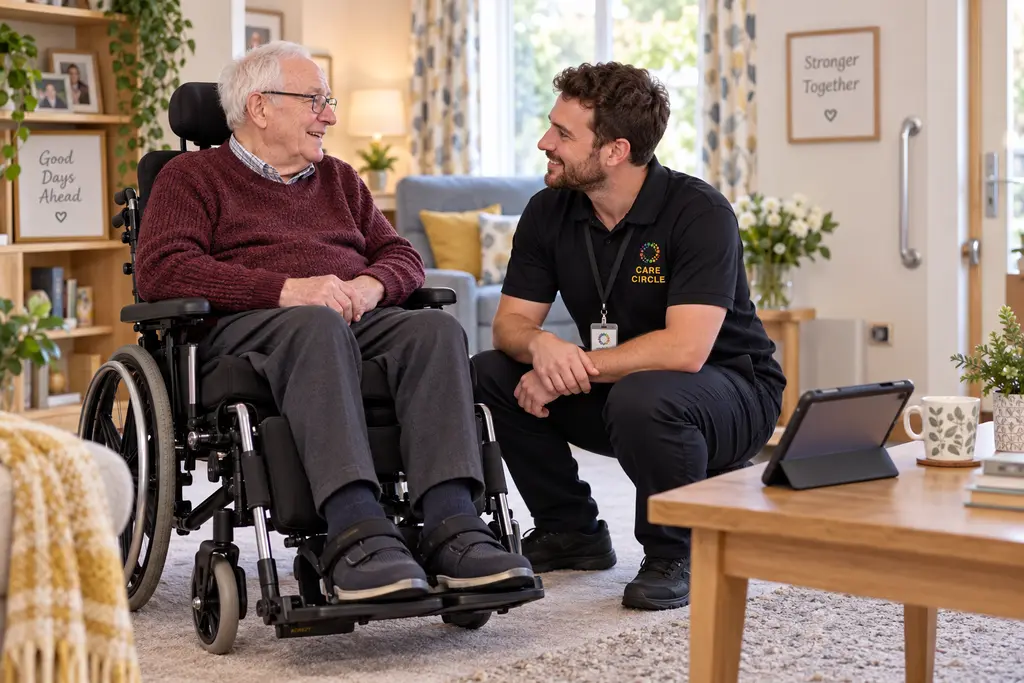
Occupational therapy for independence in your own surroundings.

Occupational therapy is about participation in everyday life. A community occupational therapist can explore why an activity has become difficult and work with the person to find a safer, more manageable way to do it. That may involve practising or adapting a task, conserving energy, changing a routine, recommending equipment or considering how the living space supports independence.

A home-based occupational therapy assessment may look at access, steps, flooring, lighting, furniture layout, bed and chair transfers, washing and toileting, kitchen tasks, fatigue, memory, confidence and the support already available. The aim is not to make a home look clinical. It is to understand how the person actually lives and identify proportionate changes that may improve safety, convenience, dignity and control.

Recommendations can range from a different technique or small item of equipment to a more formal adaptation such as rails, bathing equipment, ramps or changes to access. The occupational therapist assesses and recommends within their professional scope; Care Circle does not promise council funding and does not present therapy assessment as building work. Where an adaptation needs landlord, local-authority, contractor or supplier involvement, responsibilities and permissions must be agreed separately.

Our community therapy team can consider occupational therapy enquiries for private homes, care homes, nursing homes, extra-care housing and supported-living settings. Suitability and clinician availability are confirmed for each postcode. Occupational therapy may also support discharge planning, falls prevention, neurological rehabilitation, fatigue management, changes associated with dementia, and the confidence to resume meaningful domestic, social or leisure activities.

  • Assessment of daily living tasks in the place where they happen
  • Advice on safer routines, pacing and ways to simplify an activity
  • Equipment and home-environment recommendations based on individual assessment
  • Guidance for relatives or care teams, with the person’s consent
  • Coordination with physiotherapy, healthcare teams or local services where appropriate

One assessment pathway, with distinct professional roles.

The first appointment is a clinical assessment, not an automatic commitment to a course of treatment. The physiotherapist or occupational therapist discusses the person’s history, priorities and existing advice, then agrees which assessments are appropriate. Consent, communication, cognition, fatigue, pain, risk and the support available between visits all matter.

A physiotherapist may assess movement, strength, balance, walking and transfers. An occupational therapist may assess how the person completes daily activities and how the physical, sensory, cognitive and social environment affects performance. If both disciplines are relevant, their goals should connect without duplicating work or giving conflicting instructions.

The outcome is an agreed starting plan with goals, proposed review points and clear responsibilities. The number and frequency of sessions depend on assessment and preference. Improvement cannot be promised, and support should be reviewed, adapted or ended when it is no longer useful.

Make each visit connect with the rest of your care.

Progress often depends on what is practical between appointments. A therapy plan should explain what the person can practise independently, what requires support and when an activity should stop pending advice. We discuss who is available to help and what they feel able to do; a family member should not be assumed to be a trained carer.

With consent and appropriate authority, relevant guidance can be shared with relatives, care staff or other professionals. Care teams need clear instructions that fit the existing care plan and their competence. Exercise support does not replace a moving-and-handling assessment, and staff should not improvise transfers, equipment or adaptation arrangements.

Changes in wellbeing, tolerance or function can then inform review. Therapy records and updates are shared through the agreed communication route. If another NHS, council or private team is already involved, tell us so that recommendations can be coordinated.

Clear costs for your individual circumstances.

Ask for a therapy consultation to discuss the setting, postcode, goals and whether physiotherapy, occupational therapy or combined input is being considered. Before booking, request a written quotation that distinguishes assessment from follow-up appointments and explains session length, travel, written reports, equipment recommendations and any other applicable charges.

For a care provider, an individual resident assessment, a planned visiting arrangement and a request involving several residents may need different proposals. We clarify who is instructing the service, who consents and who pays. A group activity is not a substitute for an individual clinical assessment where one is required.

Physiotherapy and occupational therapy are quoted separately from home-care or live-in-care rates. Equipment, adaptations, installation and building work are not assumed to be included in a therapy fee. If an insurer, commissioner, council or another organisation may fund the service, obtain their authorisation first; an enquiry does not confirm eligibility, funding or an appointment.

From enquiry to review

A clear next step, at every stage.

  1. 01

    Tell us what matters

    Share the postcode, living setting and broad goals. We discuss the appropriate next step and availability.

  2. 02

    Agree an assessment

    Understand the proposed visit, the information needed and its cost before confirming.

  3. 03

    Build your plan

    Your physiotherapist or occupational therapist assesses your needs and agrees practical goals and support between visits.

  4. 04

    Review together

    Look at what has changed and decide whether to continue, adapt the plan or seek other input.

Local PT and OT enquiries

Let’s start with your postcode.

Our coordination team is based in Newmarket. We welcome enquiries across the areas below; the appropriate physiotherapist or occupational therapist, travel and suitability are checked for each request.

Physiotherapy and OT in Cambridge

Physiotherapy and occupational therapy enquiries for homes and care settings in Cambridge and nearby communities.

Enquire about therapy in Cambridge

Physiotherapy and OT in Suffolk

Share your town or village and postcode so we can check practical visiting options for the appropriate therapist.

Enquire about therapy in Suffolk

Physiotherapy and OT in Essex

PT and OT enquiries for private homes, residential services and nursing settings are considered individually.

Enquire about therapy in Essex

Physiotherapy and OT in Norfolk

Ask about appropriate physiotherapist or occupational therapist availability for your location and goals.

Enquire about therapy in Norfolk

A listed area is an invitation to enquire, not confirmation of an available local appointment. Send your postcode for an individual availability check.

A little more clarity

Your questions,
answered.

For advice about your own circumstances, speak with the care team before making arrangements.

Can I arrange private physiotherapy or occupational therapy without a GP referral?

You can contact Care Circle directly to discuss private physiotherapy or occupational therapy. The therapist may need relevant medical information, discharge instructions or contact with another clinician before deciding whether assessment or treatment is appropriate. Enquiring does not guarantee acceptance or an appointment.

What is the difference between physiotherapy and occupational therapy?

Physiotherapy often concentrates on movement, strength, balance, pain and physical rehabilitation. Occupational therapy concentrates on everyday activities and how the person, task and environment interact. Their work can overlap, and some people benefit from coordinated input from both professions.

Can an occupational therapist advise on equipment and home adaptations?

Following individual assessment, an occupational therapist may recommend equipment, changes to routines or adaptations intended to support safety and independence. Supply, installation, funding and permissions are separate matters and may involve a council, landlord, supplier or contractor.

Do you visit care homes and nursing homes as well as private houses?

We welcome PT and OT enquiries for private homes, residential care homes, nursing homes, extra-care housing and other community settings. Each request is considered against the person’s needs, access arrangements, local clinician availability and the cooperation needed from the setting.

Who delivers the therapy?

Physiotherapy and occupational therapy assessments are delivered by individual clinicians registered with the Health and Care Professions Council for their profession and with experience appropriate to the agreed work. A carer supporting an agreed plan is not a substitute for a physiotherapist or occupational therapist.

How many sessions will I need?

There is no standard number that is right for everyone. Assessment identifies a starting plan and a review point. Your goals, health, response to treatment, ability to practise and preferences help determine whether further visits are useful.

Can family members receive updates?

Yes, where the person consents or another appropriate legal basis applies. Agree who should receive updates and what can be shared. The physiotherapist can explain practical recommendations and review progress with the people authorised to be involved.

Is this an emergency or an urgent falls-response service?

No. This enquiry route is for planned therapy assessment and rehabilitation. If someone is acutely unwell, injured or has sudden new symptoms, seek the appropriate urgent medical help rather than waiting for an enquiry to be answered.

Your next step

Let’s talk about the right support.

Tell us where support is needed, the everyday goal and whether you are considering physiotherapy, occupational therapy or both. We’ll discuss suitability, local availability and a tailored quotation before you decide.

A consultation request does not commit you to a course of treatment.
Further reading from professional and public health sources

This guide explains service arrangements and general rehabilitation considerations. The clinician assesses what is appropriate for the individual.