Skip to content
24/7 coordination: 0333 006 2393
Care Circle Ltd — The Reliable Care Agency
Detailed guide · Recovery and reablement

Rehabilitation after surgery or a hospital stay.

A clear, individual plan for returning to everyday activities, coordinated with the advice from your treating team.

  • Discharge advice respected
  • Function and confidence
  • Reviewed at your pace
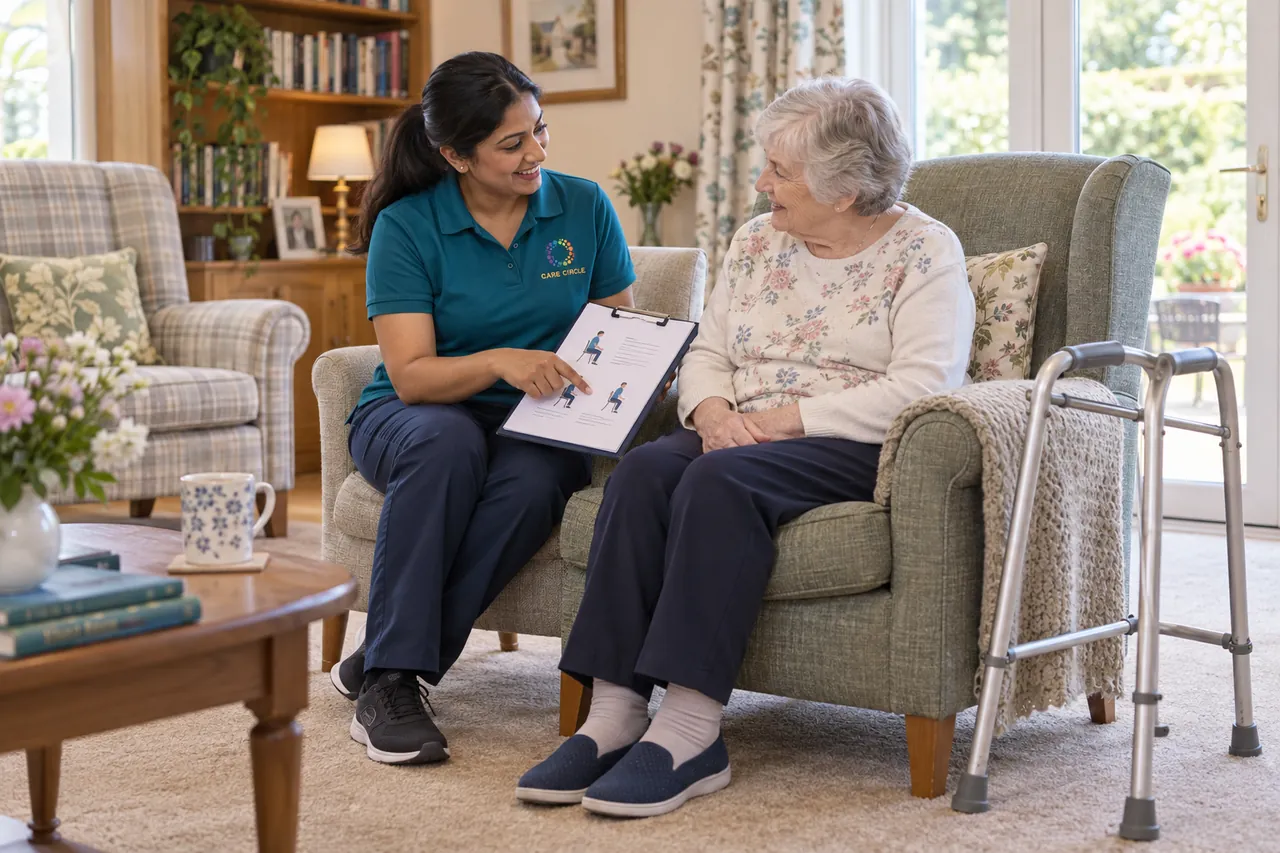
Care Circle professional supporting recovery and everyday mobility in a British home
A considered transition from hospital to everyday routines.
Built around youMovement.Independence.Everyday life.

Leaving hospital can bring practical questions about moving around, managing stairs or returning to a usual routine. Physiotherapy may be considered after an operation, illness or a period of reduced activity, but the timing and approach depend on the clinical situation. Care Circle can discuss home or care-setting assessment alongside the instructions already given by the hospital team.

Start with the discharge and surgical instructions.

Tell us what treatment or hospital stay the enquiry relates to and whether rehabilitation has already been arranged. The physiotherapist may need discharge information, details of restrictions and the relevant clinical contact before treatment is agreed. The need for further advice will depend on the procedure and the person’s circumstances.

After joint surgery, for example, any weight-bearing or movement restrictions must be understood. A general guide cannot replace the surgeon’s instructions. Physiotherapy should not begin on the assumption that every person can follow the same exercises or recovery timetable.

Translate recovery goals into ordinary activities.

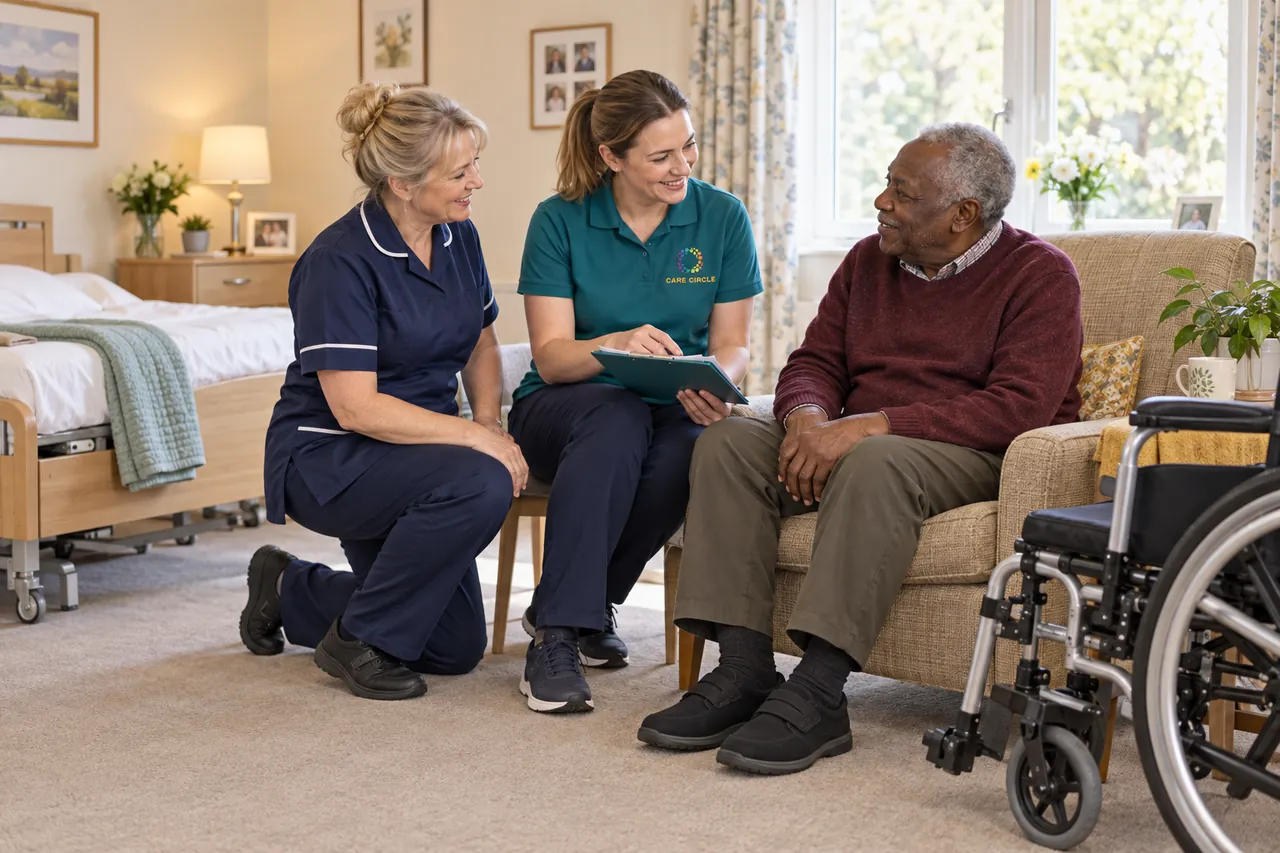
Assessment considers the person’s current movement and the activities they need or want to resume. Goals might involve standing from a chair, walking between rooms, managing access or building tolerance for everyday tasks. Pain, fatigue and other conditions need to be taken into account.

An agreed programme may include suitable movement practice, exercise and pacing, with clear guidance for independent activity and supported activity. The physiotherapist reviews response and adapts the plan when appropriate. A return to a previous level of function cannot be guaranteed.

Plan for recovery at home or in a care setting.

A home visit can identify practical issues with access, stairs, furniture and the support available. Family involvement can be useful if the person wants it, but responsibilities must be realistic. Where personal care or supervision is also needed, it should be arranged separately from the physiotherapy appointment.

In a care or nursing home, the programme needs to connect with the resident’s care plan and staff support. If an NHS rehabilitation team remains involved, agree how private sessions will complement that work. Equipment, adaptations or additional clinical needs may require another service.

Know how the plan will be reviewed.

Before agreeing follow-up sessions, discuss the goals, expected review point, session arrangements and costs. Ask how progress will be communicated and whom to contact if the programme is difficult to manage. A review may lead to a different approach, onward advice or ending treatment when further sessions are not useful.

New or worsening symptoms after discharge may need advice from the surgical team or another medical service. Follow the discharge instructions for urgent concerns rather than waiting for a routine physiotherapy visit. At enquiry stage, provide only broad information; detailed documents can be shared through an agreed secure process.

A little more clarity

Your questions,
answered.

For advice about your own circumstances, speak with the care team before making arrangements.

How soon after an operation can physiotherapy start?

It depends on the procedure, discharge plan, clinical instructions and current condition. Share those details through the agreed process so that an appropriate clinician can consider timing. There is no universal start date.

Can I arrange extra sessions alongside NHS rehabilitation?

You can enquire about private input, but tell us what NHS rehabilitation is already in place. Coordination and the person’s consent are important to avoid conflicting advice or duplicated plans.

Is physiotherapy the same as a reablement care package?

No. A physiotherapist provides clinical assessment and rehabilitation within their scope. Help with personal care, daily routines or supervision may require a separate care arrangement, even when the services work towards related goals.

Your next step

Let’s talk about the right support.

Tell us where support is needed, the everyday goal and whether you are considering physiotherapy, occupational therapy or both. We’ll discuss suitability, local availability and a tailored quotation before you decide.

A consultation request does not commit you to a course of treatment.
Further reading from professional and public health sources

This guide explains service arrangements and general rehabilitation considerations. The clinician assesses what is appropriate for the individual.