
Skip to content
24/7 coordination: 0333 006 2393
Care Circle Ltd — The Reliable Care Agency
Detailed guide · Falls, balance and mobility

Build confidence in balance and everyday movement.

Explore practical support for steadier movement and greater confidence, as part of a wider understanding of falls risk.

  • Movement and confidence
  • Individual falls-risk context
  • Practical review goals
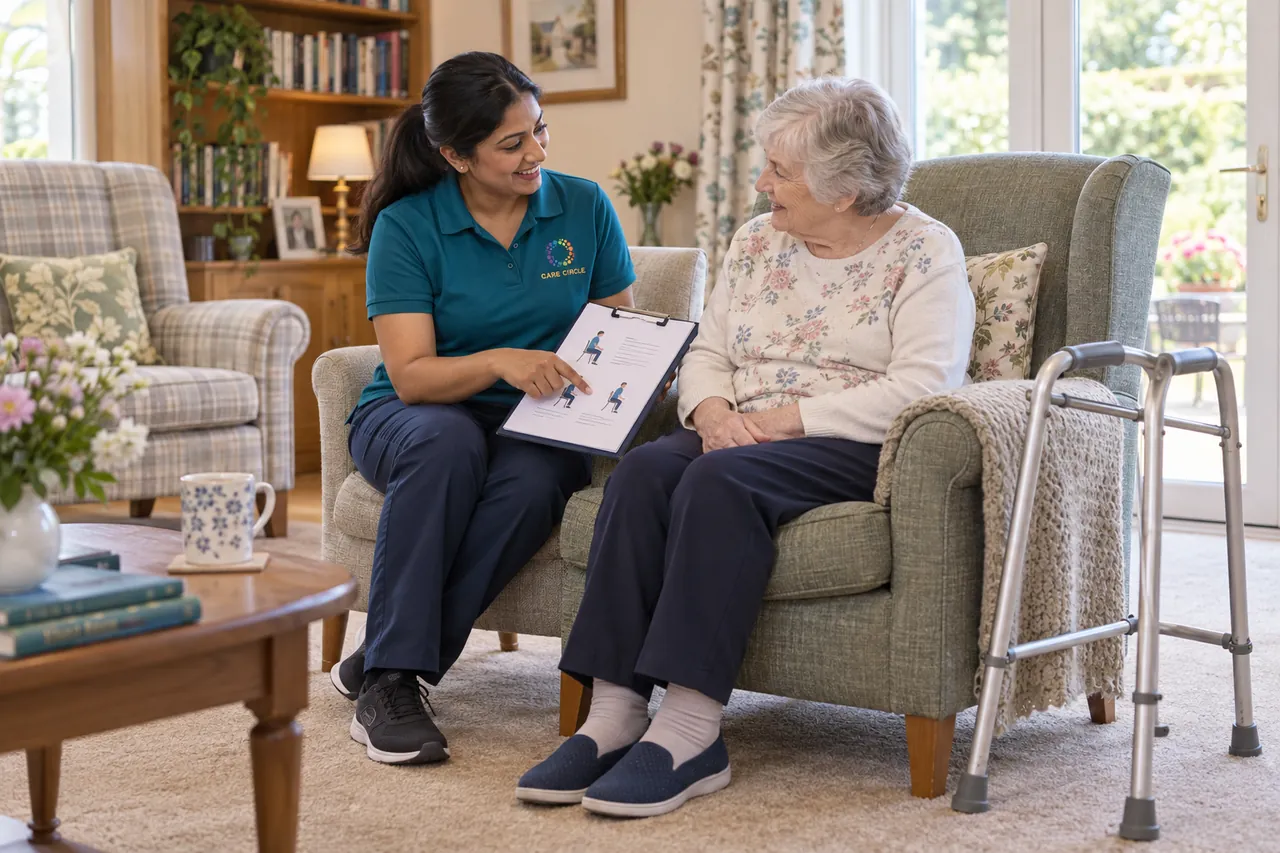
Physiotherapist in a Care Circle polo discussing a mobility plan with an older resident in a British care-home lounge, with a walking frame nearby
Individual goals, with care-home teams involved.
Built around youMovement.Independence.Everyday life.

A fall, a near miss or a fear of falling can change the way someone moves through their day. Physiotherapy may help address relevant strength, balance and walking difficulties, but falls can have several causes. An appropriate plan considers the person’s circumstances and whether a GP, falls service or another professional should also be involved.

Look beyond the fall itself.

Assessment begins with what happened, what has changed and which activities now feel difficult. The physiotherapist considers mobility and relevant physical factors while recognising that medication, vision, illness and the environment may need assessment by other professionals. Physiotherapy alone is not a complete falls assessment for every person.

If a fall involves injury, a possible blackout or a sudden unexplained change, appropriate medical assessment takes priority. A routine rehabilitation appointment is not a rapid-response service and should not delay urgent help.
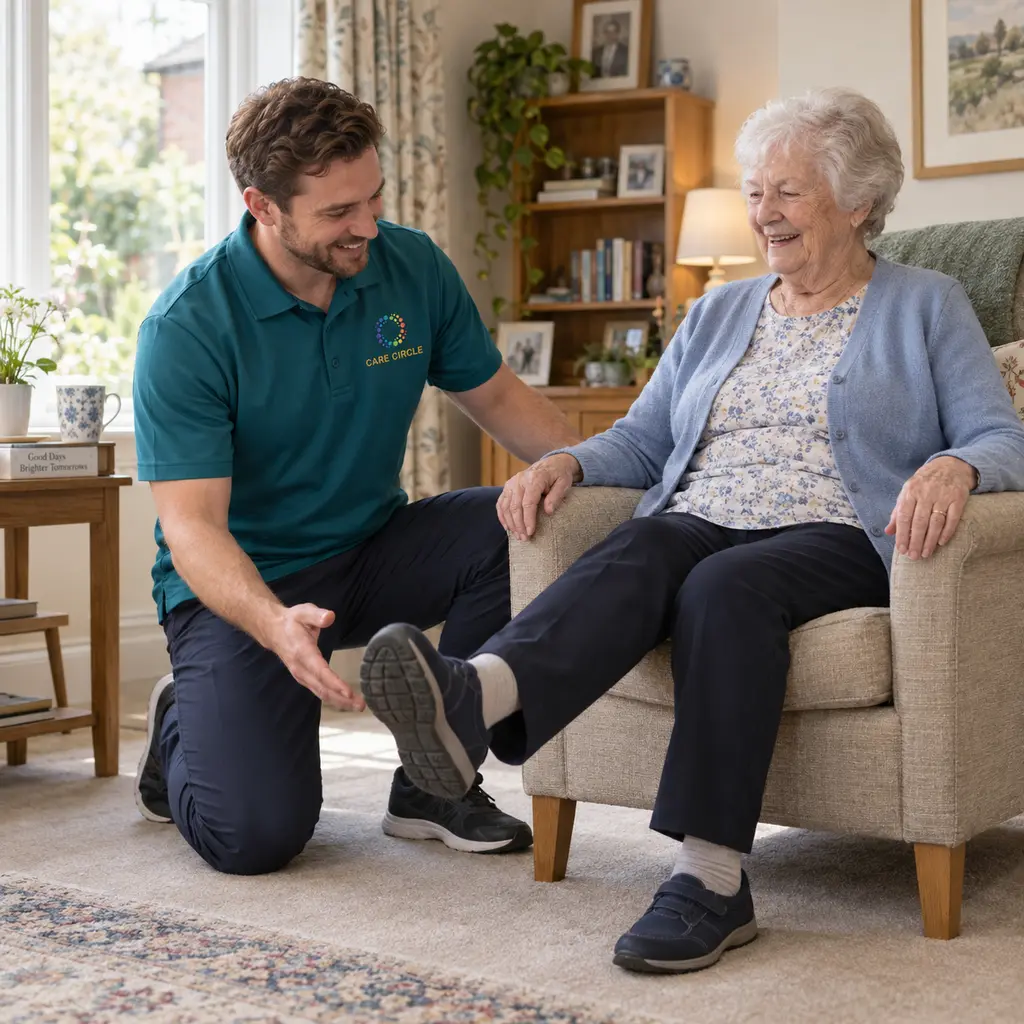
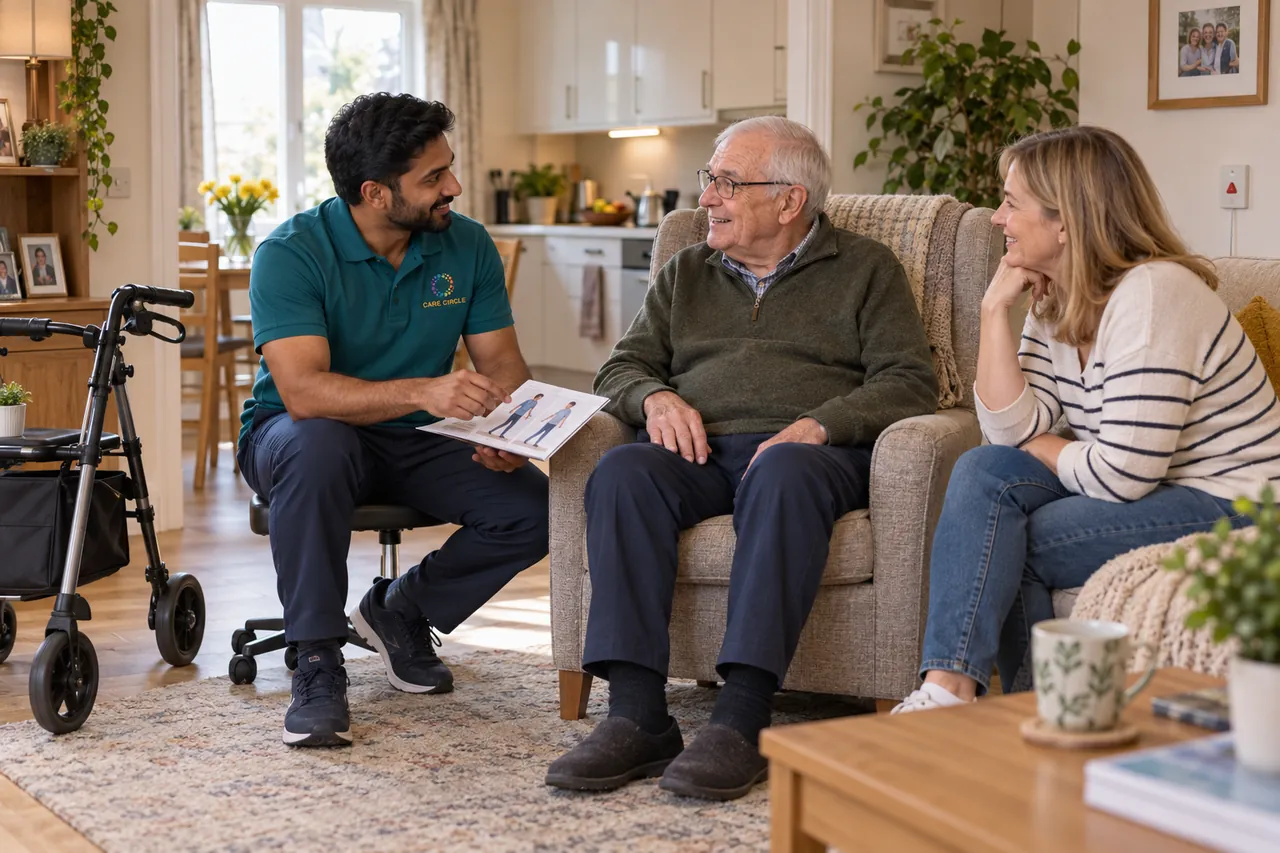
Make the plan specific to everyday movement.

Following assessment, an individual programme may focus on strength, balance, walking or practising relevant activities. It should explain the level of support needed and how activities can be adapted. A programme for someone in a nursing home will need to reflect different resources and risks from one practised independently at home.

Confidence deserves attention too. A practical goal may be returning to a familiar room or an activity the person has started avoiding. Progress should be reviewed against meaningful activities and the person’s experience, without promising that exercise will prevent every fall.

  • Discuss usual walking aids and the assistance currently needed
  • Identify everyday movements that feel unsafe or have become restricted
  • Agree safe supervision and support for the selected activities
  • Review changes in confidence, function and tolerance

Connect with the wider falls plan.

Advice about hazards or equipment may need coordination with the responsible care team, an occupational therapist or a falls service. Existing moving-and-handling instructions should remain in place unless formally reviewed. Do not change a walking aid or transfer technique simply because it appears in a photograph or general guide.

In a care home, staff observations about changes in mobility can help inform review. At home, relatives may notice increasing fatigue or avoided activities. Agree a way to share relevant changes and clarify when the person needs medical advice rather than an adjustment to exercise.

Arrange an assessment around your priorities.

An initial enquiry can explain the setting, postcode, broad mobility concern and whether falls have already been assessed by a clinician. We will discuss whether physiotherapy is an appropriate next step and confirm available expertise before booking.

Ask for assessment and follow-up fees, what guidance is included and when a review is proposed. There is no standard course length or guaranteed reduction in falls. The plan should remain proportionate to the individual’s needs, wishes and response.

A little more clarity

Your questions,
answered.

For advice about your own circumstances, speak with the care team before making arrangements.

Does physiotherapy prevent every fall?

No. Falls can have several causes. Physiotherapy may address relevant movement, strength and balance needs, but a broader assessment and other interventions may be needed. Outcomes vary between individuals.

Should a recent fall be checked before physiotherapy?

A fall with injury, a possible blackout or new symptoms may require medical assessment first. Seek appropriate urgent help where needed; do not wait for this enquiry service.

Can the programme be followed in a care home?

An assessed programme can be planned for a care setting where appropriate. The physiotherapist and home need to agree supervision, staff competence, documentation and the route for reporting changes.

Your next step

Let’s talk about the right support.

Tell us where support is needed, the everyday goal and whether you are considering physiotherapy, occupational therapy or both. We’ll discuss suitability, local availability and a tailored quotation before you decide.

A consultation request does not commit you to a course of treatment.
Further reading from professional and public health sources

This guide explains service arrangements and general rehabilitation considerations. The clinician assesses what is appropriate for the individual.