
Skip to content
24/7 coordination: 0333 006 2393
Care Circle Ltd — The Reliable Care Agency
Extra-care housing · Independence at home

Physiotherapy in extra-care housing.

Support for moving around your own apartment and taking part in the life of your community.

  • Self-contained apartments
  • Everyday access and participation
  • Coordination with on-site support
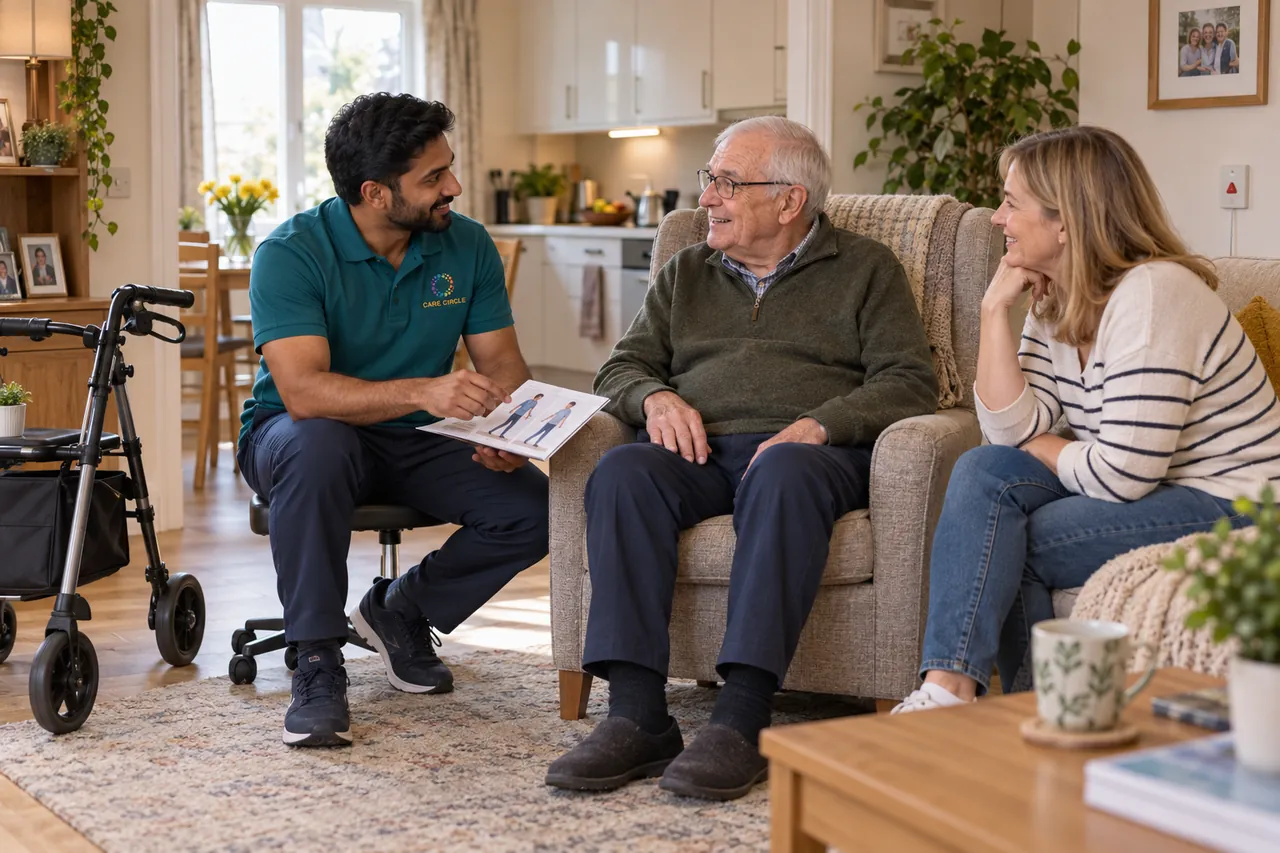
Care Circle physiotherapist meeting an older man and his daughter in a self-contained extra-care apartment with an accessible kitchenette and rollator
Support for independence in a person’s own apartment.
Built around youMovement.Independence.Everyday life.

Extra-care housing combines a person’s own home with access to agreed care or support. Physiotherapy should respect that independence. A visit can focus on the daily movements that matter within the apartment and, where relevant, the shared spaces used for meals, activities or meeting other people. The approach depends on the person, not simply the type of building.

Connect rehabilitation with independent living.

Useful goals might include standing to prepare a drink, reaching a communal lounge, managing a doorway or rebuilding confidence after time in hospital. The physiotherapist considers movement alongside the person’s priorities, health and existing support. Any activities are selected after assessment rather than from a standard scheme-wide programme.

The same discussion may be relevant in retirement apartments, sheltered housing or supported living, but those settings differ in the support they provide. Tell us the actual arrangements: whether staff are present, what assistance is commissioned and who can help between appointments. On-site care should never be assumed to include exercise supervision.
Assess the spaces you actually use.

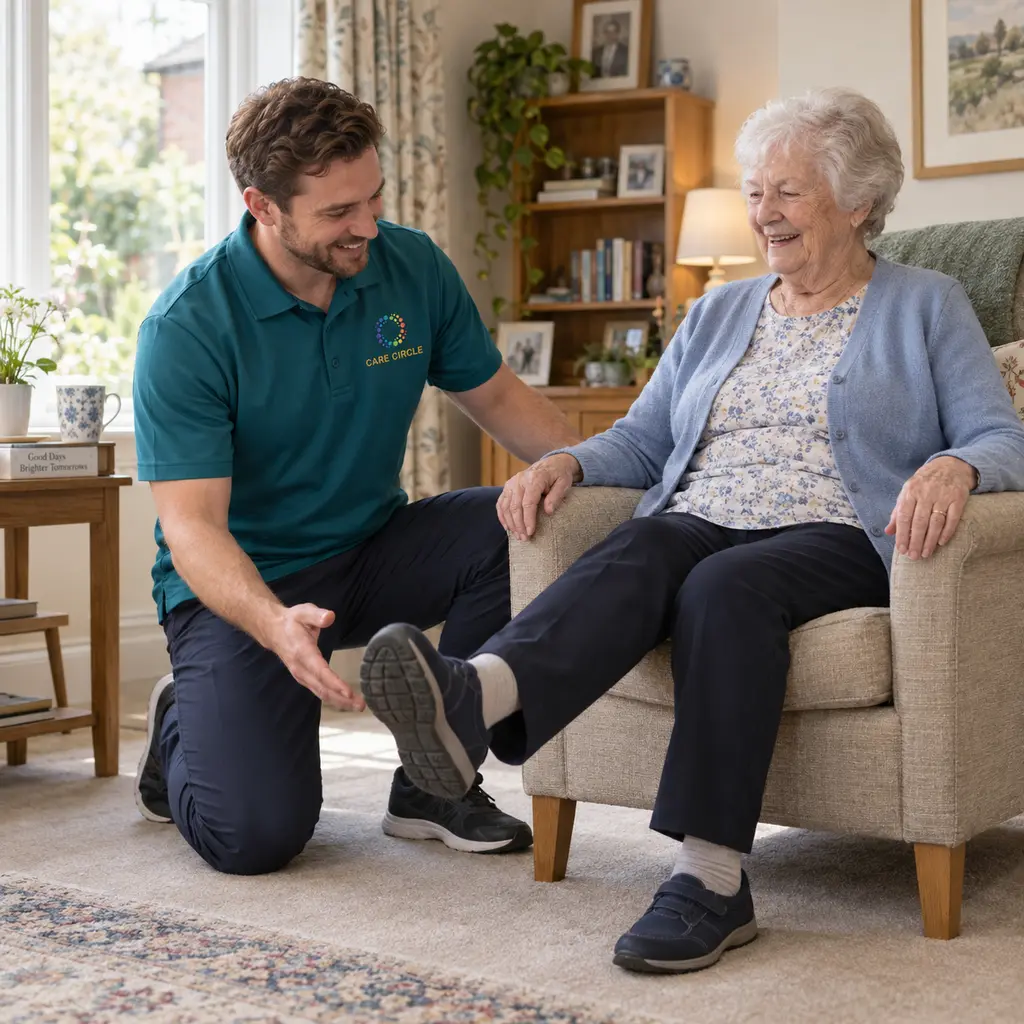
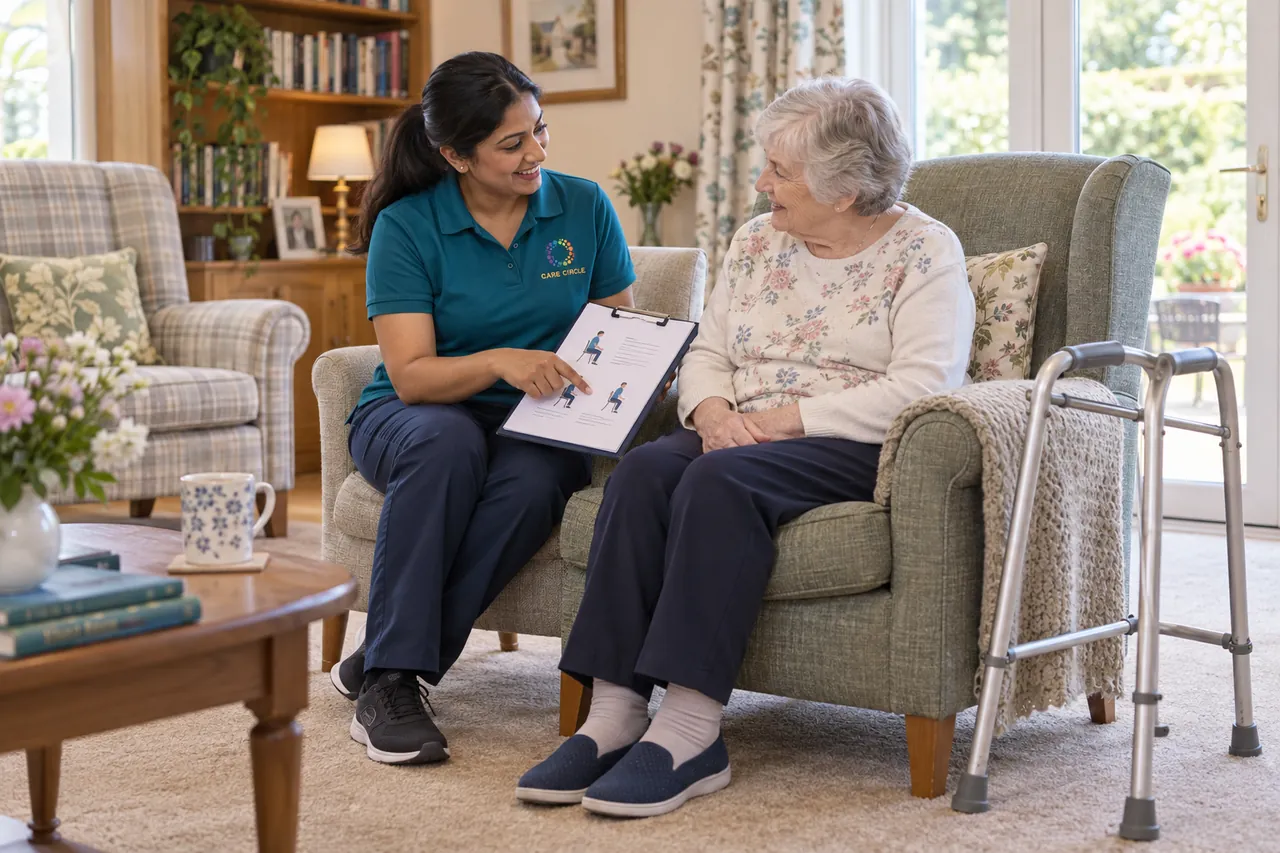
Assessment may begin in the apartment and include relevant routes through the building if appropriate and agreed. Lift access, doors, distances, seating and the availability of rest points can all influence what is practical. Use of a communal room requires the person’s agreement and the scheme’s permission.

A rehabilitation plan may include strategies for pacing activity and practising agreed movements. Concerns about adaptations or specialist equipment may need occupational therapy or another service. Any changes to shared spaces should be coordinated with the housing provider; a therapy recommendation is not permission to alter the building.

Keep the right people involved.

The resident decides who should be involved where they are able to do so. A relative, care coordinator or support worker may help explain routines and make a plan achievable, but housing staff are not automatically entitled to clinical information.

If carers are to support activities, the responsibilities and guidance must be agreed with the care provider. Where someone has an existing NHS therapist, share this at the enquiry stage so that proposed private input can be coordinated. Reviews should reflect changes in independence, confidence and participation as well as physical measures.

Practical arrangements and individual costs.

When enquiring, include the scheme’s postcode, access arrangements and whether the visit is for one resident or a provider discussion. We will clarify the appropriate clinical expertise and availability before confirming a visit.

Physiotherapy is a separate service from rent, service charges and the resident’s existing care package unless a written arrangement specifies otherwise. Ask for assessment and follow-up costs, any travel charges and the cancellation policy. A consultation can establish the likely options without committing to a series of sessions.

A little more clarity

Your questions,
answered.

For advice about your own circumstances, speak with the care team before making arrangements.

Do I need permission to have physiotherapy in my own apartment?

Discuss any building access or visitor arrangements with the scheme as needed. Clinical consent comes from the person receiving the service or the appropriate decision-making process. Use of shared facilities may require separate permission.

Can you discuss visits with an extra-care scheme manager?

Yes. A manager can enquire about practical arrangements or proposed provision. Individual residents still need appropriate assessment, consent and a clear understanding of any charges.

Is supported living the same as extra-care housing?

No. Housing, care and staffing arrangements vary. Tell us how the person lives and what support is actually available so that the enquiry can be considered on its own circumstances.

Your next step

Let’s talk about the right support.

Tell us where support is needed, the everyday goal and whether you are considering physiotherapy, occupational therapy or both. We’ll discuss suitability, local availability and a tailored quotation before you decide.

A consultation request does not commit you to a course of treatment.
Further reading from professional and public health sources

This guide explains service arrangements and general rehabilitation considerations. The clinician assesses what is appropriate for the individual.