Skip to content
24/7 coordination: 0333 006 2393
Care Circle Ltd — The Reliable Care Agency
Your home · Your everyday goals

Physiotherapy in your own home.

Work on the movements that matter to you, in familiar surroundings and at a pace agreed with your physiotherapist.

  • Private houses and apartments
  • Practical movement goals
  • Family involvement by agreement
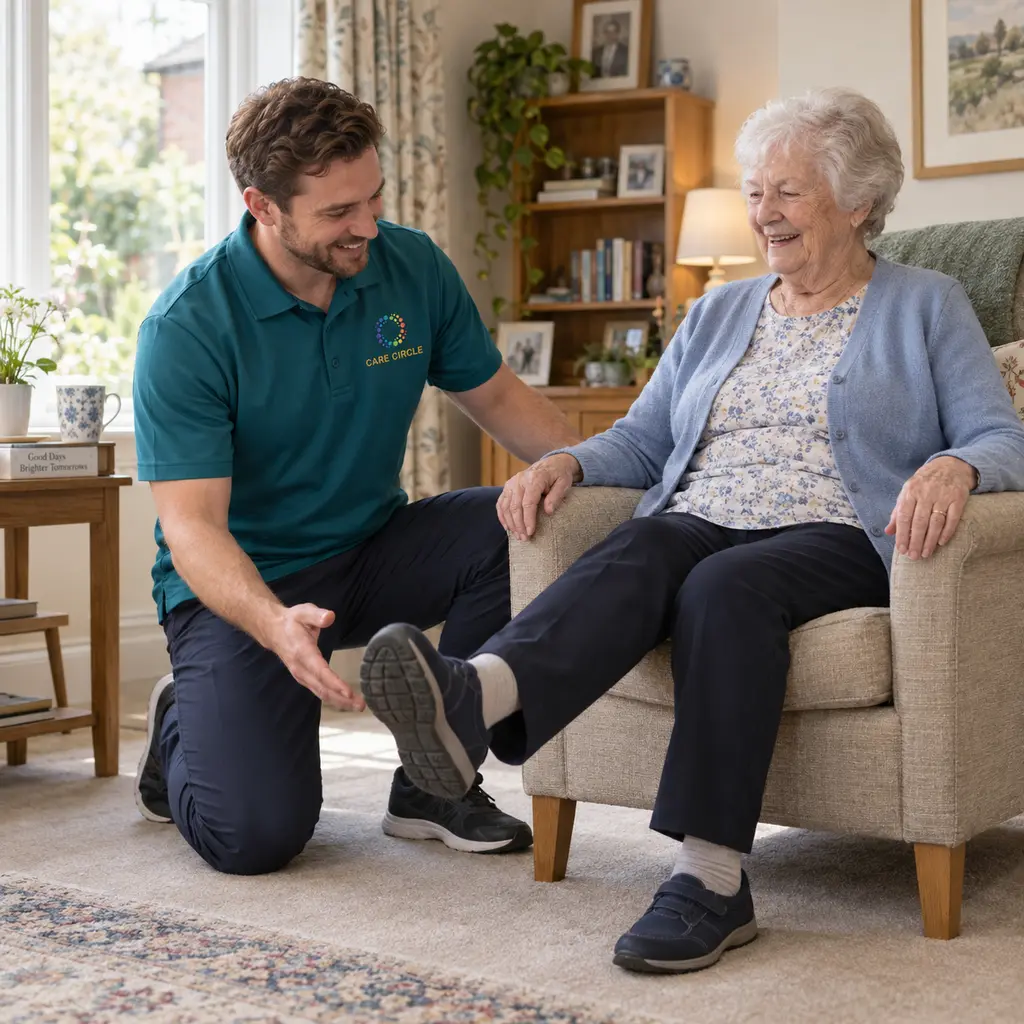
Physiotherapist in a teal Care Circle uniform supporting an older woman with a seated movement exercise in a British home
Rehabilitation shaped around everyday life at home.
Built around youMovement.Independence.Everyday life.

A home visit makes it possible to understand how movement affects your actual day. The distance between a bed and bathroom, the height of a favourite chair and the confidence to reach the garden can be more useful starting points than a general exercise target. Home physiotherapy may suit people for whom travel is difficult, tiring or disruptive, as well as those who want rehabilitation connected to daily routines.

When a home visit may be useful.

Enquiries may follow a hospital stay, an operation, a fall or a gradual change in mobility. Others relate to a long-term neurological condition, reduced confidence outdoors or difficulty returning to usual activities. The first discussion helps establish the main problem and whether a home visit is a suitable starting point.

Treatment takes account of other health conditions, symptoms and existing clinical advice. If a concern needs medical investigation or a different specialist, the physiotherapist will explain the appropriate next step. There is no requirement to achieve a particular level of fitness before asking about an assessment.
What happens during a home assessment?

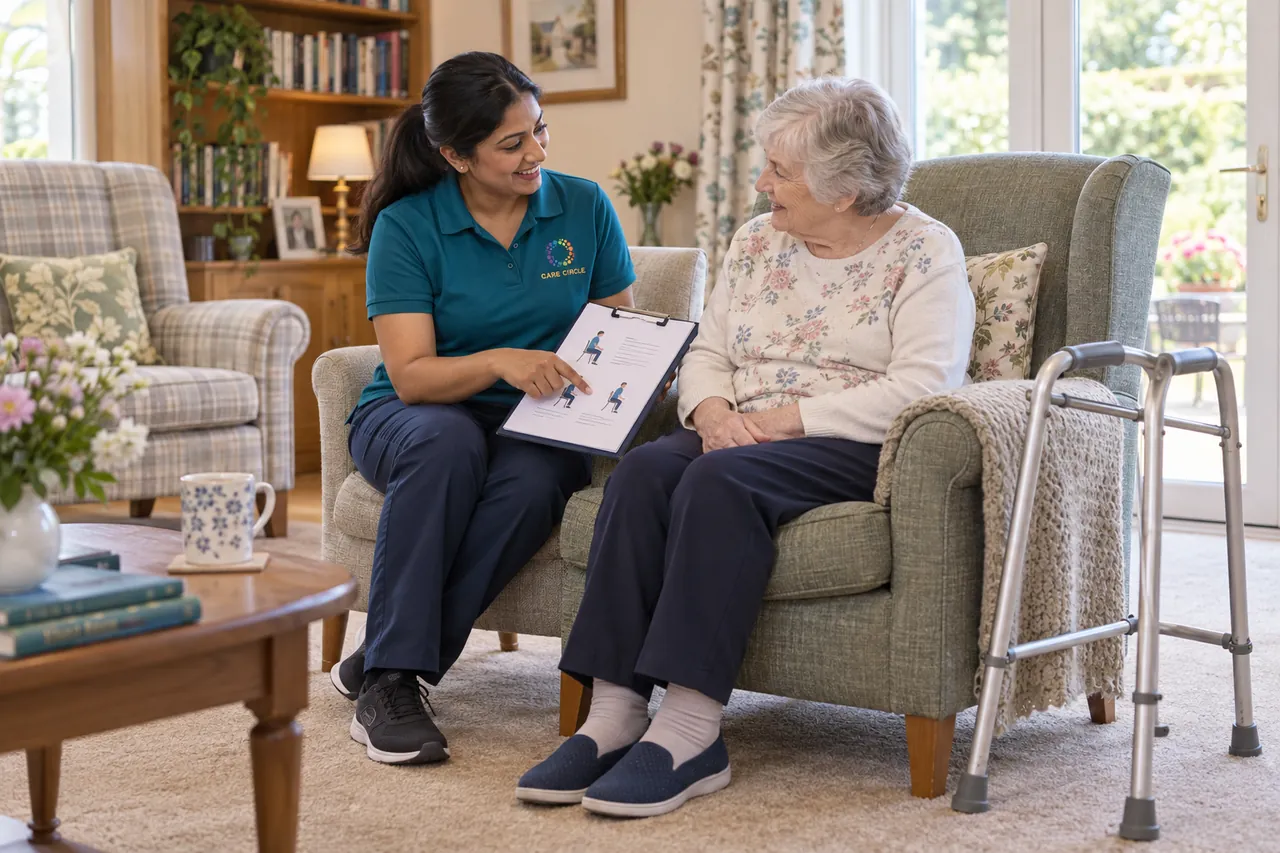
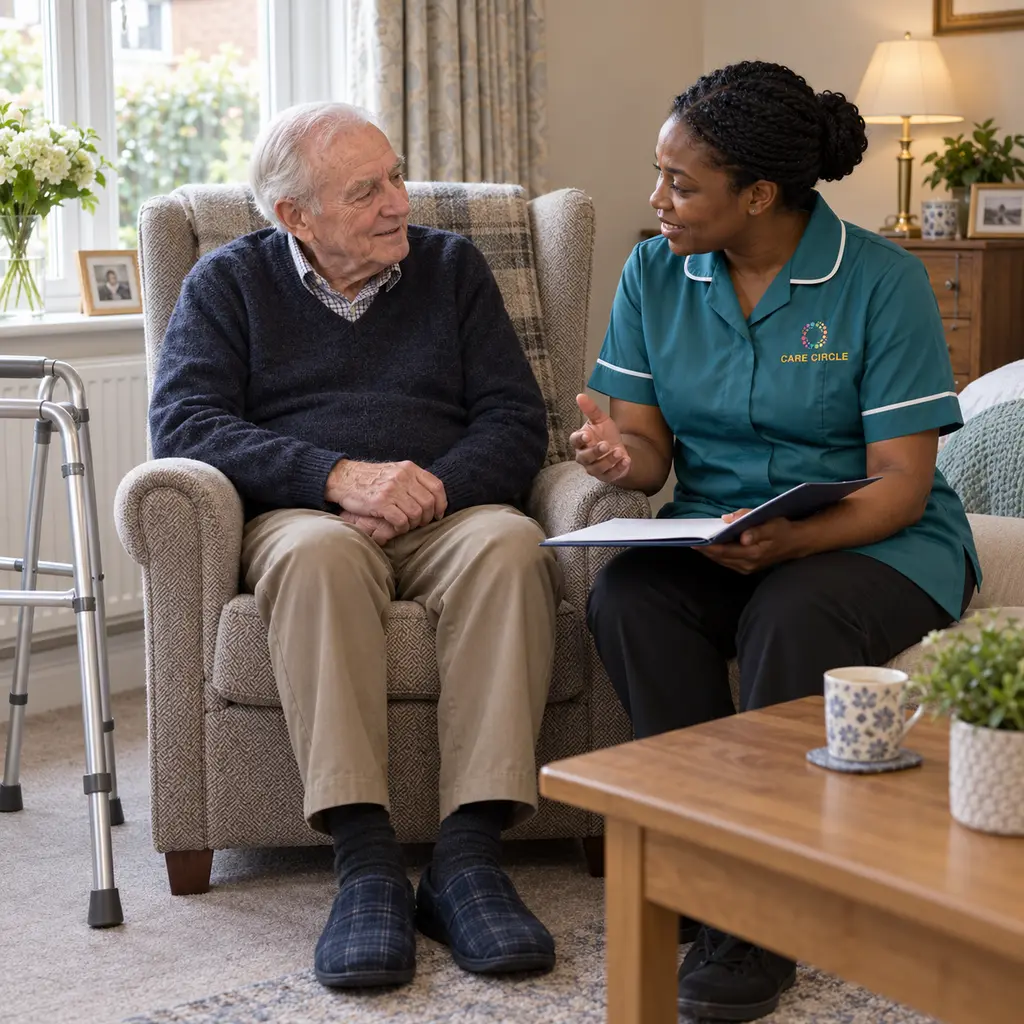
The physiotherapist begins by hearing what has changed and what you would like help with. With consent, assessment may look at walking, standing balance, strength, getting in and out of a chair or other movements relevant to your goals. You can ask questions, request a pause or decline an activity.

An agreed plan may use the space and everyday tasks available in your home. It should set out manageable activities, the support required and a point at which progress will be reviewed. Equipment or home adaptations may need a separate assessment or referral; they are not automatically included in a visit fee.

  • Share relevant discharge letters and current rehabilitation instructions when requested
  • Tell us about steps, parking, lifts and any difficulty entering the property
  • Wear comfortable clothing and your usual footwear, if practical
  • Arrange a relative or carer to attend if you want their support

A plan that fits the support you have.

If relatives or carers help between sessions, the physiotherapist should discuss what they are willing and able to do. A clear plan identifies activities you can do yourself and those that need supervision. Written or demonstrated guidance should be understandable to the people using it.

We agree how updates are shared and who to contact with a non-urgent question. Where there is already an NHS rehabilitation team or another therapist involved, tell us so that advice can be coordinated and conflicting programmes avoided. Additional private visits should complement the agreed approach.

Plan the visit and its cost before booking.

Send your postcode, a broad description of the support needed and a convenient way to contact you. We will discuss clinician availability and any information needed to consider the enquiry. A detailed medical history should be shared through an appropriate secure route, rather than a general website message.

Ask what is included in the initial assessment, the likely length of a follow-up and any travel or report charges. Physiotherapy has its own quotation and is not charged at the home-care rate shown elsewhere on this site. Further appointments are agreed in light of the assessment and your preferences.

A little more clarity

Your questions,
answered.

For advice about your own circumstances, speak with the care team before making arrangements.

Do I need exercise equipment at home?

Do not buy equipment before assessment unless your clinician has advised it. Many goals can be explored using your existing environment. If equipment is recommended, ask about suitability, sourcing and any additional cost.

Can someone stay with me during the visit?

A relative, representative or carer can be involved if you wish. Their role, your privacy and what information can be shared should be agreed with you.

Can home physiotherapy help after discharge?

An assessment may help identify rehabilitation priorities after discharge. The physiotherapist needs to understand the discharge plan, restrictions and any ongoing NHS input before agreeing a suitable programme.

Your next step

Let’s talk about the right support.

Tell us where support is needed, the everyday goal and whether you are considering physiotherapy, occupational therapy or both. We’ll discuss suitability, local availability and a tailored quotation before you decide.

A consultation request does not commit you to a course of treatment.
Further reading from professional and public health sources

This guide explains service arrangements and general rehabilitation considerations. The clinician assesses what is appropriate for the individual.