
Skip to content
24/7 coordination: 0333 006 2393
Care Circle Ltd — The Reliable Care Agency
Residential care · Everyday participation

Physiotherapy in residential care homes.

Help residents work towards meaningful movement goals, with guidance that connects to the care they receive each day.

  • Resident-led goals
  • Guidance for the care team
  • Individual or provider enquiries
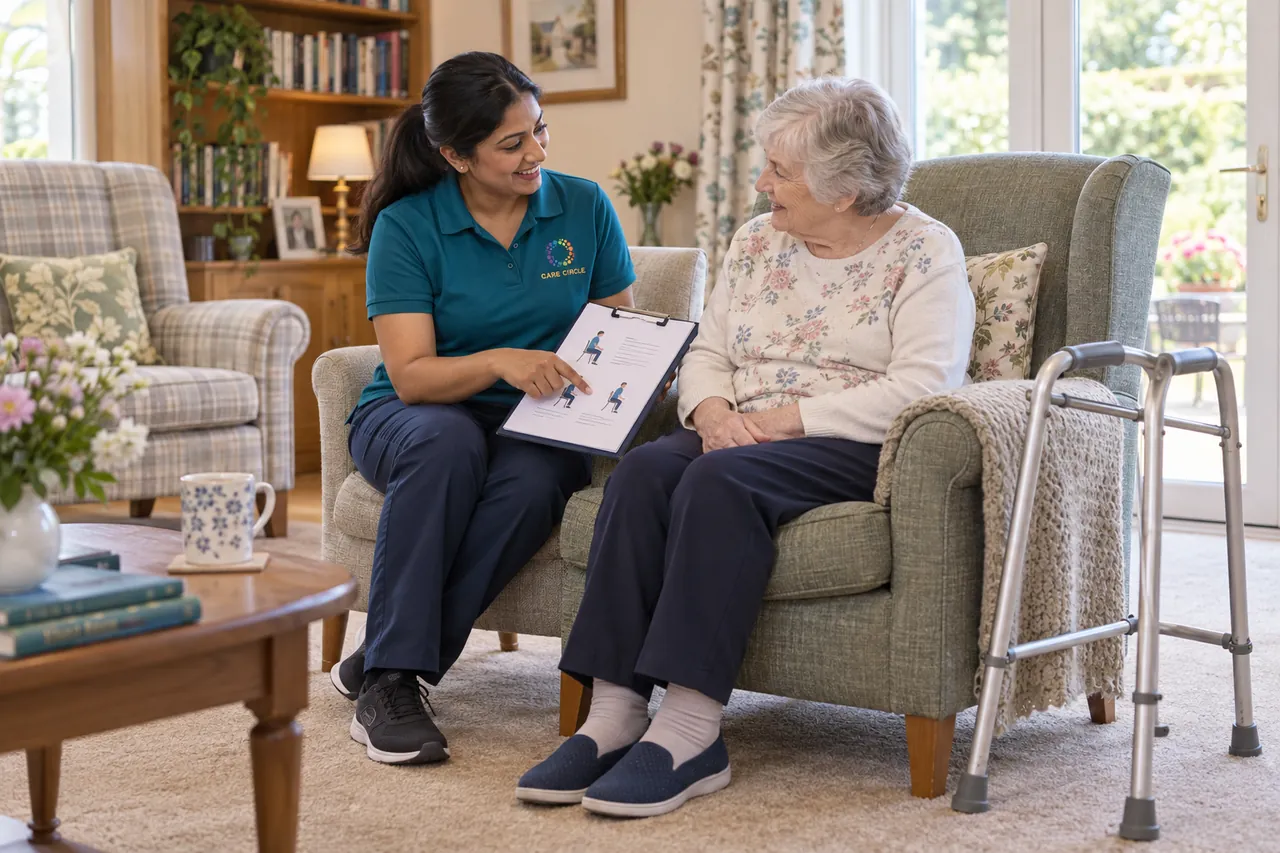
Physiotherapist in a Care Circle polo discussing a mobility plan with an older resident in a British care-home lounge, with a walking frame nearby
Individual goals, with care-home teams involved.
Built around youMovement.Independence.Everyday life.

For a care-home resident, a meaningful goal might be joining an activity, reaching the dining room or feeling more confident when getting out of a chair. Physiotherapy should begin with that person’s wishes and abilities. Care Circle welcomes enquiries from residents, families and residential care providers about individual assessment and appropriately planned rehabilitation.

See the resident beyond a mobility score.

A change in walking or transfers can affect independence, confidence and social participation. Assessment considers what the resident wants to do, the support they currently receive and the routines that shape the day. Hearing, vision, cognition, communication, fatigue and anxiety may influence how an appointment is approached.

For someone living with dementia, familiar surroundings, an unhurried explanation and a trusted person’s involvement may help engagement. Consent and decision-making must be considered appropriately. Rehabilitation goals should be realistic and reviewed when needs change, including when comfort or maintaining participation becomes the main priority.

Make the recommendations usable on the floor.

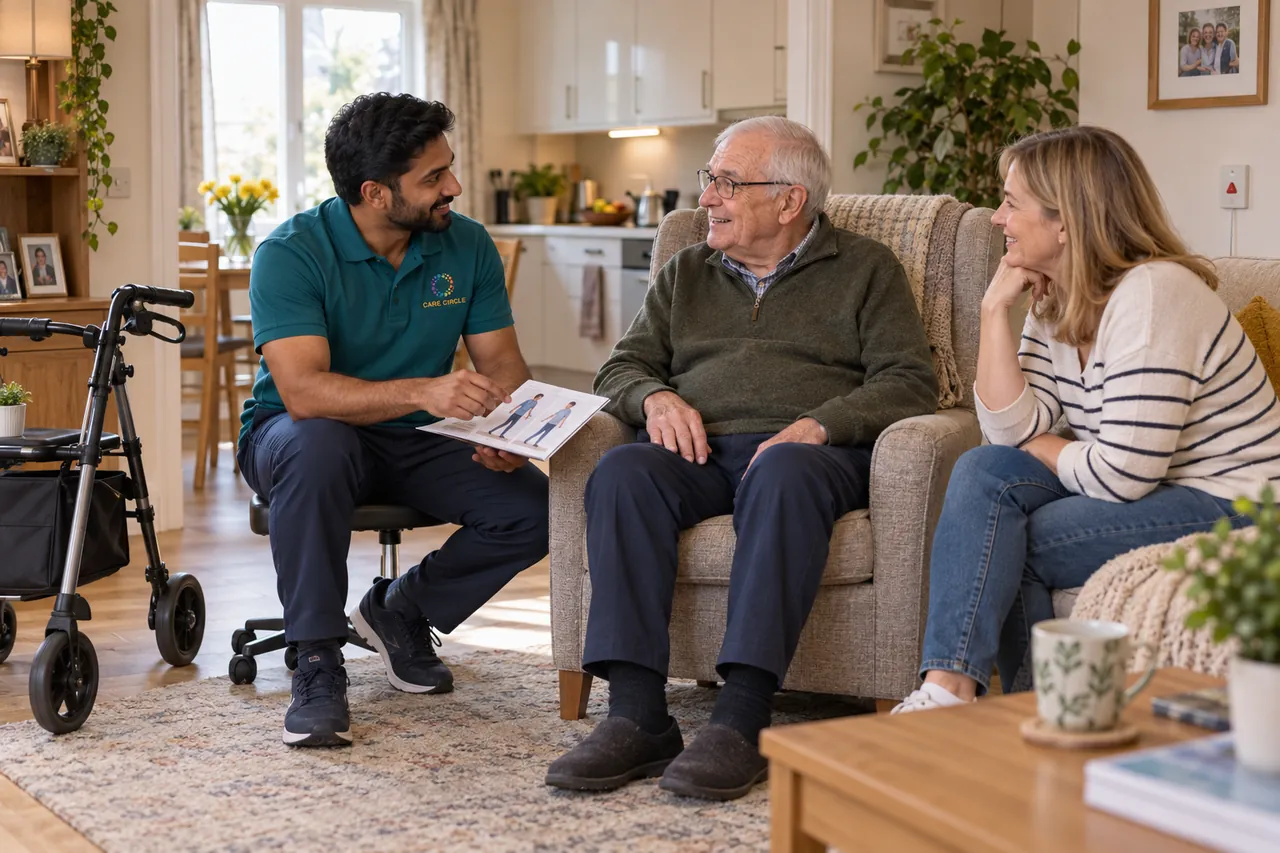
With consent and appropriate authorisation, the physiotherapist can discuss findings with the relevant care-home lead. Recommendations need to be compatible with the care plan, staff competence and the level of assistance available. Clear records should distinguish an exercise plan from instructions for everyday transfers.

Care staff may support agreed activities after receiving suitable guidance, but a physiotherapy visit does not by itself certify staff in moving and handling. If equipment, staffing or transfer arrangements need review, the responsible professionals and the home should agree the next steps before changes are made.

  • Identify the resident’s goals and existing mobility or falls plan
  • Agree who attends the assessment and who receives the findings
  • Clarify which activities need supervision and who can provide it
  • Set a review point and a route for reporting changes

Individual visits or a planned provider arrangement.

A family may enquire about one resident, while a provider may want to discuss regular visiting capacity. In either case, access, consent, clinical responsibility and payment need to be clear. Separate residents require their own consideration; a provider booking does not remove individual choice.

Tell us about the home’s location, the broad needs involved, the facilities available and the support expected between appointments. Any proposal will identify the agreed work and its limits. Group movement sessions, if discussed, need suitable assessment and planning and should not be presented as individual clinical treatment for every participant.

Keep families informed and review what matters.

Agree whether progress will be reviewed against a practical activity, comfort, confidence or another relevant outcome. Records should make it possible to see what has changed and why a plan has been adapted. A lack of improvement may prompt a different approach or onward advice rather than indefinite sessions.

Residents and authorised relatives should understand the proposed fees, what reports or updates are included and how further visits are agreed. Private physiotherapy costs are separate from accommodation and care fees unless a specific written arrangement says otherwise.

A little more clarity

Your questions,
answered.

For advice about your own circumstances, speak with the care team before making arrangements.

Can a family arrange physiotherapy for a care-home resident?

Yes, a family can enquire. The resident’s consent or appropriate decision-making arrangements, the home’s cooperation and clinician suitability must be established before an appointment is confirmed.

Can care staff support exercises between visits?

Where appropriate, a physiotherapist can explain agreed activities to staff. The home must ensure that staff have the competence, time and information to provide the specified support safely.

Can a care home request regular physiotherapy visits?

Providers can discuss a planned visiting arrangement. The scope, residents’ individual needs, consent, clinician availability, documentation and costs are agreed before a service starts.

Your next step

Let’s talk about the right support.

Tell us where support is needed, the everyday goal and whether you are considering physiotherapy, occupational therapy or both. We’ll discuss suitability, local availability and a tailored quotation before you decide.

A consultation request does not commit you to a course of treatment.
Further reading from professional and public health sources

This guide explains service arrangements and general rehabilitation considerations. The clinician assesses what is appropriate for the individual.