Skip to content
24/7 coordination: 0333 006 2393
Care Circle Ltd — The Reliable Care Agency
Nursing homes · Coordinated rehabilitation

Physiotherapy in nursing homes.

Thoughtful rehabilitation for residents whose movement, comfort and participation need to be considered alongside ongoing nursing care.

  • Coordination with nursing staff
  • Complex needs considered individually
  • Comfort and function both matter
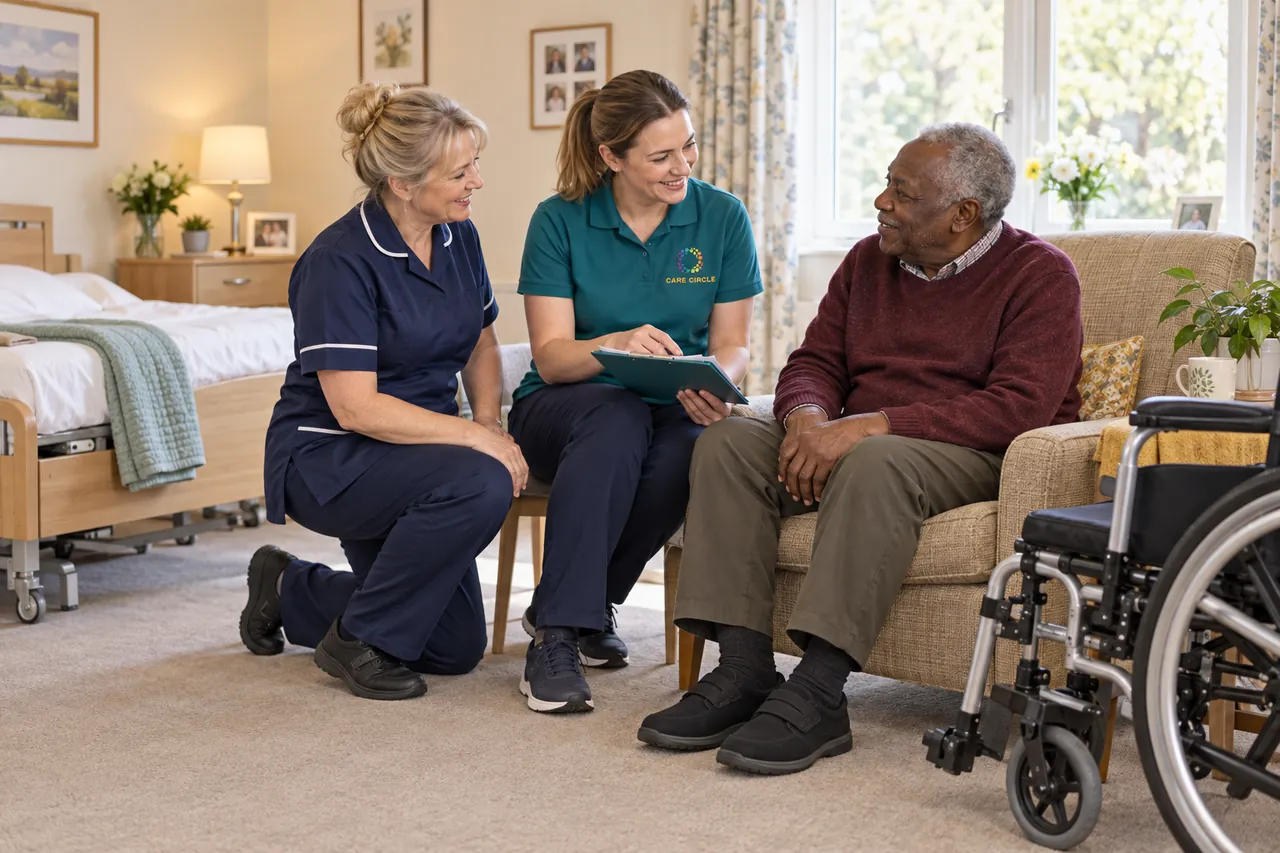
Care Circle physiotherapist and nurse discussing rehabilitation with a seated resident beside a profiling bed and wheelchair in a nursing-home room
Physiotherapy coordinated with the resident’s nursing care.
Built around youMovement.Independence.Everyday life.

Nursing-home residents may have several conditions, fluctuating wellbeing or additional support needs. An appropriate physiotherapy plan must fit around those realities. Care Circle’s nursing background informs how we approach coordination, while the physiotherapist remains responsible for their own assessment, recommendations and treatment within their professional scope.

Understand the clinical context before treatment.

Relevant information may include recent illness, surgery, changes in mobility, pain, fatigue and existing medical or rehabilitation instructions. The physiotherapist and the home’s clinical lead should agree what needs to be available, who can share it and whether further advice is required before a visit.

A resident’s diagnosis alone does not establish suitability. The assessment considers current presentation, priorities, tolerance and risks. Where needs fall outside the available physiotherapist’s competence or require a different specialist service, that should be explained rather than a generic programme being offered.
Set goals that are meaningful and achievable.

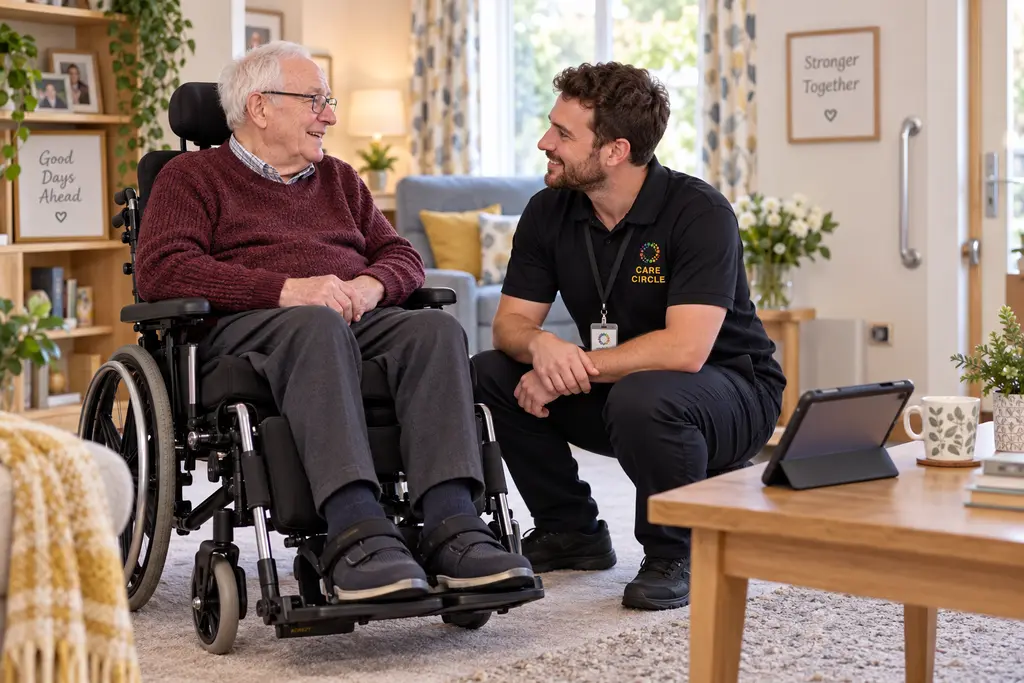
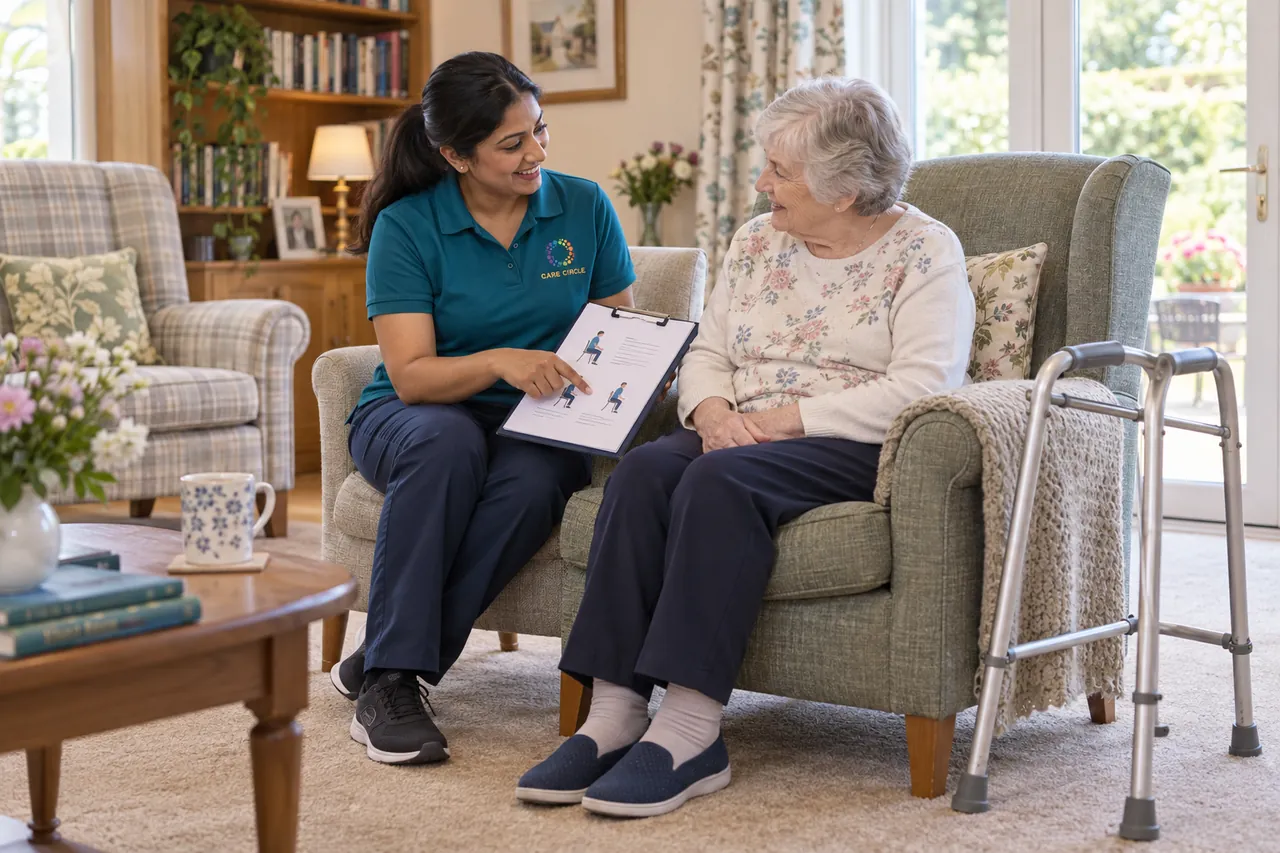
Goals may relate to getting out of bed, sitting comfortably, participating in transfers, maintaining movement or returning to a familiar activity. For some residents, rehabilitation aims to regain function; for others, maintaining ability or improving comfort may be more appropriate. Goals should be agreed with the resident wherever possible and revisited as circumstances change.

Positioning, seating or equipment concerns may require joint working with nursing staff, an occupational therapist or a specialist service. Recommendations about moving and handling must be coordinated with the home’s assessment and equipment procedures. Physiotherapy does not replace those responsibilities.

Build rehabilitation around the resident’s care.

Appointment timing should consider meals, personal care, medication routines, rest and other treatment. The team should know how much assistance is needed during a session and whether particular staff should be available. Clear preparation can prevent an appointment becoming tiring or impractical for the resident.

With the necessary consent or authority, the physiotherapist can communicate agreed findings and recommendations to the nursing team. Changes such as a marked reduction in tolerance, new pain or deterioration should be escalated through the resident’s clinical plan rather than waiting for the next therapy appointment.

  • Agree the clinical contact and access to relevant records
  • Clarify assistance, equipment and space required for the visit
  • Document responsibilities for support between sessions
  • Review goals alongside changes in nursing or medical needs

Arrange an individual assessment or discuss provider needs.

A nursing home can enquire about a resident assessment or a proposed visiting arrangement. Families can also contact us, with the home involved in practical and clinical planning. We need the postcode, broad needs and a named contact before considering clinician availability.

The written proposal should distinguish assessment, follow-up treatment, reporting and any agreed coordination time. Funding and consent should be established for each resident. Ongoing nursing care, physiotherapy and any specialist equipment remain distinct elements unless expressly included in the agreed arrangement.

A little more clarity

Your questions,
answered.

For advice about your own circumstances, speak with the care team before making arrangements.

Can residents with complex conditions be considered?

Yes, an enquiry can be considered individually. Acceptance depends on the clinical needs, available information, suitable physiotherapist expertise, the setting and the support required. Complex needs do not automatically mean that this service is appropriate.

Will the physiotherapist work with the nursing team?

Relevant communication with the nursing team can be agreed with the resident’s consent or appropriate authority. Clinical responsibilities, documentation and escalation arrangements should be clear.

Is physiotherapy useful when walking is not the main goal?

Assessment may identify goals involving comfort, sitting, movement, transfers or participation. The physiotherapist will discuss what is appropriate and realistic for the individual; walking recovery is not a promised outcome.

Your next step

Let’s talk about the right support.

Tell us where support is needed, the everyday goal and whether you are considering physiotherapy, occupational therapy or both. We’ll discuss suitability, local availability and a tailored quotation before you decide.

A consultation request does not commit you to a course of treatment.
Further reading from professional and public health sources

This guide explains service arrangements and general rehabilitation considerations. The clinician assesses what is appropriate for the individual.