
Skip to content
24/7 coordination: 0333 006 2393
Care Circle Ltd — The Reliable Care Agency

Personalised support at home

One-to-One Support

Focused individual support shaped around assessed goals and risks.

Focused individual support at home, in the community or in an appropriate care environment, shaped around the person’s preferences, assessed outcomes and risks.

  • Personalised adult support
  • Assessment before care begins
  • Can join a wider nurse-led package
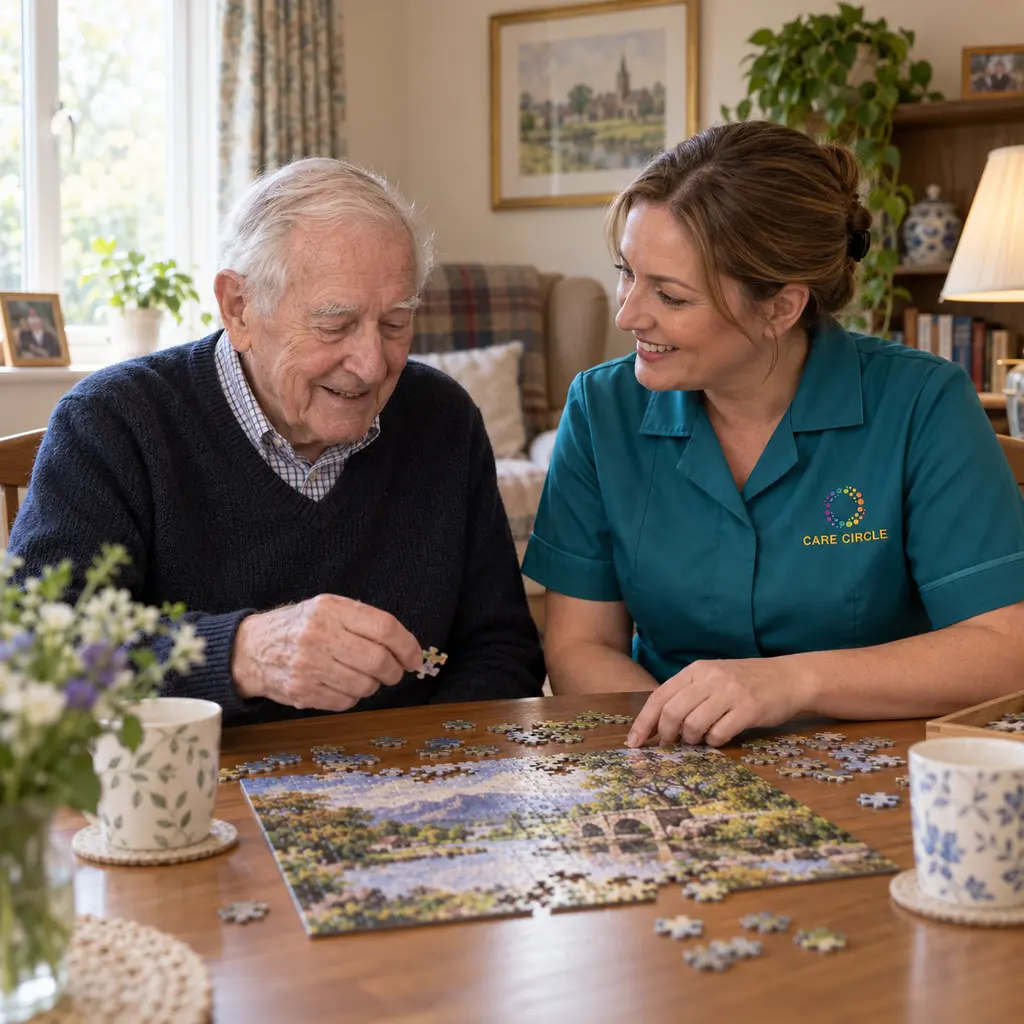
A Care Circle support professional giving an older person individual attention during a chosen activity.

Time and attention, shaped around one person

Understanding the service

What one-to-one support actually involves

One-to-one support provides the undivided attention of a single care professional for an agreed period. It is used where risk, communication needs, distress, behaviour that others find challenging, or a specific goal means shared or group support cannot work. The purpose is defined at the outset: safety, participation, rehabilitation, routine or all of these.

When this support may be helpful

Personalised support for everyday life.

One-to-one arrangements often follow an incident, a hospital admission or a placement breakdown, or are recommended in a risk assessment or positive behaviour support plan. Families and commissioners also arrange it to enable education, work, activities or community access that would otherwise be inaccessible.

The starting point is always the person’s own priorities. Support should make home life more manageable without taking it over, so the plan records what help is wanted as clearly as what is needed.

  • Adults who benefit from dedicated individual attention
  • People needing support to take part in daily or community life
  • People whose health, communication or behaviour requires a consistent approach
  • Services seeking an individually assessed support arrangement in an appropriate environment

What Care Circle can provide

Support available around the person

Support may include continuous supervision where assessed, personal care, following an agreed behaviour or communication approach, supporting activities and community access, prompting daily routines, recording specified observations, and consistently applying the strategies set out in the person's plan.

The list below describes what may be included. The final set of tasks, their timing and who carries them out are agreed at assessment and written into the care plan, so both the person and the family know what each visit covers.

  • Care and daily routines at home
  • Community access, appointments and meaningful activities
  • Communication and emotional support
  • Personal care, meals, mobility and medication assistance
  • Support to follow professional therapy or behavioural guidance
  • Observation, recording and escalation against the agreed plan

Available service patterns

Arrangements that can be built around the week

One-to-one support can be arranged for short sessions, extended blocks, whole days, waking nights, sleep-in cover, live-in arrangements or double-up staffing where two professionals are assessed as necessary.

Patterns are not fixed once agreed. As confidence, health or family circumstances change, the arrangement can be reviewed and adjusted rather than left to fit a plan that no longer matches the week.

  • Scheduled one-to-one visits
  • Extended daytime support
  • Community-based sessions
  • Waking-night or overnight arrangements
  • One-to-one support within an appropriate care setting
  • Part of a wider nurse-led or multidisciplinary package

How the service is planned

A considered start to care

Planning identifies the risks being managed, the outcomes intended, the strategies that work for this person, known triggers, the staff competencies required and the person's own preferences about who supports them. Hours, ratios and review points are agreed with the funder, and the plan states when one-to-one support should be reduced.

  1. 1A conversation about the person’s priorities, routines, communication and preferred way of receiving support
  2. 2An assessment of care needs, mobility, medicines, the home environment and any known risks
  3. 3Agreement on visit times, staffing pattern, continuity priorities and the skills required
  4. 4A written care plan and risk assessments shared with the care team before support begins
  5. 5Care Circle assesses risks, desired outcomes, staffing competencies, setting requirements and the person’s preferences before a package begins
  6. 6Where learning disability or autism is relevant, the regulated activity is checked against the conditions of Care Circle’s current CQC registration before support is offered

Family involvement

The person decides how family or representatives are involved wherever they have capacity to do so. Agreed communication can support consistency without taking control away from the individual.

The professionals involved

Who delivers the service, and how competence is considered

Staff are selected against the specific competencies the plan requires — de-escalation, communication methods, autism or learning-disability experience, moving and handling, or clinical tasks — rather than assumed to be interchangeable. Preferences about gender, language and interests are taken seriously, and a small consistent team is prioritised.

Competence is specific

A qualification or registration does not authorise every task. Care Circle matches professionals to the interventions written into the plan, and reassesses when needs, equipment or instructions change.

Care planning and reviews

Clear plans that respond to change

A care plan is only useful if it reflects the present. Records from each visit, feedback from the person and family, and planned reviews are used together to keep the plan accurate as needs, preferences and risks change over time.

  • The person remains central to decisions and can say what is or is not working
  • Care records capture support provided, wellbeing observations and agreed outcomes
  • Planned reviews consider changes in need, preferences, risks and family feedback
  • Where clinical nursing is required, it is assessed and incorporated through the appropriate nurse-led plan

Safety, monitoring and escalation

Safe practice and clear responsibilities

Recording is more detailed than in general support: incidents, antecedents, interventions used and outcomes are documented so the approach can be reviewed with the professionals involved. Restrictive practice is avoided; where any restriction is authorised, it must be lawful, documented and reviewed. Safeguarding and escalation routes are explicit.

  • Care professionals are selected for the assessed role, experience, training and compatibility
  • Safeguarding concerns are recorded and reported through Care Circle’s safeguarding procedure
  • The care plan explains what staff should observe, record and escalate, including out-of-hours arrangements
  • Care Circle does not replace emergency, GP or NHS services; urgent concerns are directed appropriately

Frequently asked questions

Questions about one-to-one support

Next step

Talk through the support that would help

Get in touch with the risk assessment or support plan available. Care Circle will confirm the competencies required, whether suitable staff can be matched, how the arrangement would be reviewed and whether the regulated activity falls within the conditions of its current CQC registration. Every service is subject to individual assessment, an agreed care plan and the availability of suitably matched care professionals.